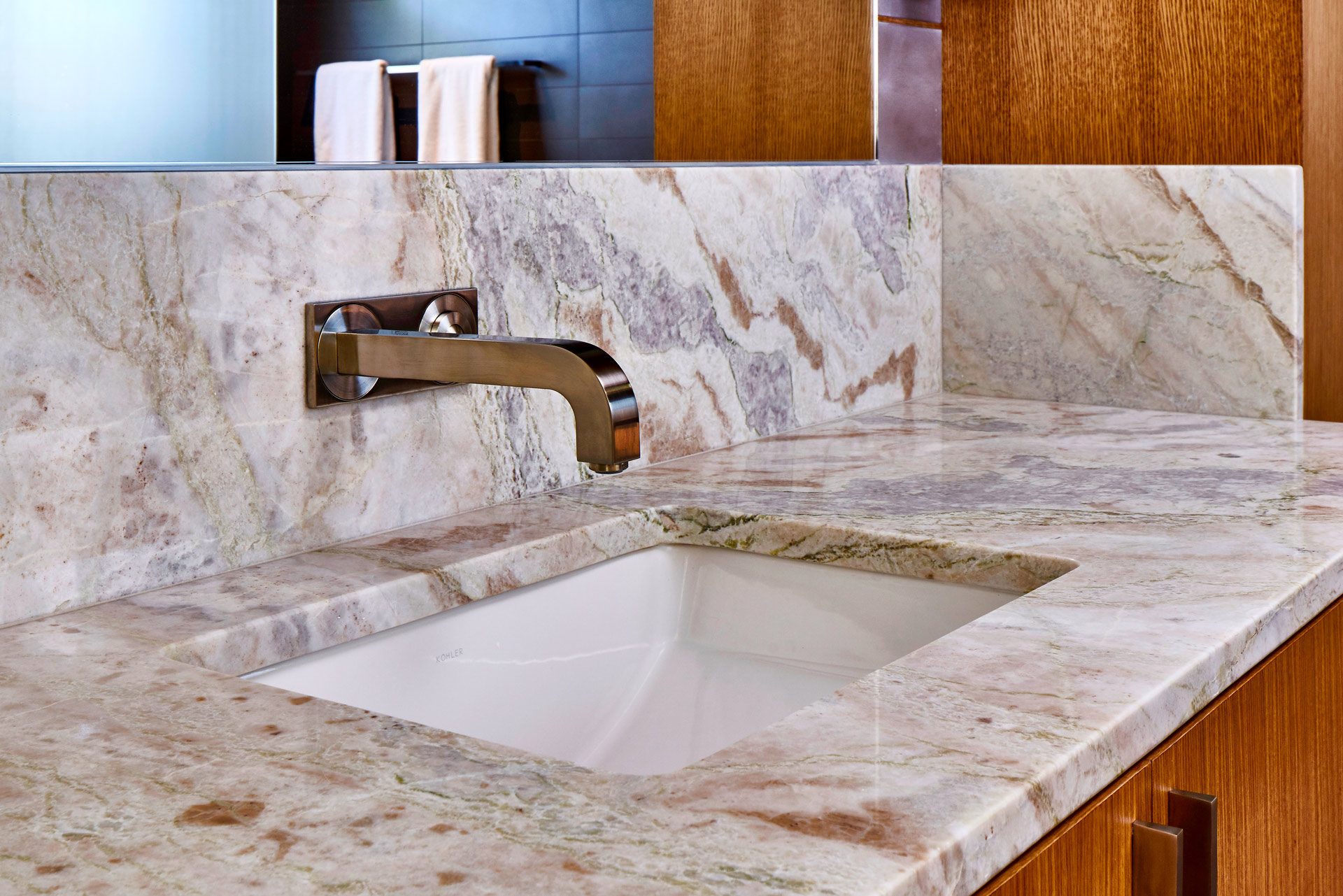
DOLOMITE
Dolomite is a metamorphic rock that looks like marble but is more durable. Savvy design professionals often specify this unique stone in areas where marble would be the choice, but the homeowner is looking for less maintenance and greater durability while maintaining a reasonable budget.
WHAT YOU SHOULD KNOW ABOUT DOLOMITE
Dolomites are a misunderstood class of natural stone products, but not to worry, we will educate and inform you on the merits and limitations of these, as well as all other classes of stones, to insure you make the right selection for your home. Lesser qualified industry participants will mistakenly refer to dolomites as quartzites. This is a huge error and possibly a deceptive trade practice employed to increase the asking price, as quartzites are known to be more durable, and thus generally more expensive.
There are a limited number of dolomites currently being quarried and used as countertop stone simply because they are less ubiquitous than marble or granite varieties. However, they do present a compelling reason to consider for choosing them as a countertop material. They tend to be less expensive than most marbles and they have superior physical characteristics. Dolomites can withstand higher heat than marble without cracking. They can etch and scratch like marble, but it takes more force to scratch and a longer time to etch than marble, so quick clean ups can save your tops from ever etching with this choice. Often, these materials are specified with a honed or leathered finish due to the fact most varieties do not take a high-level shine like most marbles, and it further helps to hide etches and scratches when they do occur; further adding to their billing as more durable.
In Summary:
- Affordable
- Looks like marble
- More durable than marble
- Can be used on outdoor kitchens
- Low to moderate maintenance required

MATERIAL CONSIDERATIONS
ABRASION RESISTANCE
Low
Dolomite is not as hard and resistant as quartzite or as soft and fragile as marble. Dolomite countertops can be scratched by glass and metal, so cutting boards should always be used, and caution should be used when handling metal utensils. Dolomite scores a 3.5-4.0 on Moh’s Scale of Relative Hardness.
ABSORPTION/STAINING
Moderate
Even though they are relatively durable, dolomite countertops can still stain over time. No matter how dense, natural stone is porous to varying degrees, and it will still absorb minor quantities of matter, moisture, and oil. These stains can be particularly troublesome when selecting lighter dolomite variants.
ACID SENSITIVITY
Moderate
Dolomite absorbs less liquid than marble and is less vulnerable to acids than marble. For example, acids such as lemon juice may etch the finish or stain within minutes on a countertop composed of marble. In comparison, dolomite would still stain, but it would take some more time before damage sets in.
HEAT RESISTANCE
High
Dolomite is heat resistant and holds heat very well compared to many other materials, which is vital for countertops that will support warm objects, such as when cooking. The heat-resistant nature of dolomite often makes them preferred over quartz and perfect for kitchen use in particular.